This is my hands-on review of web scraping APIs for B2B lead generation.
If you build lead-gen pipelines, you know the pain: directories throw anti-bot walls at you, proxy bills creep up, and parsers break.
I focused on anti-bot handling, proxy depth, JavaScript rendering, pricing and CRM-ready JSON. Scrape.do is my pay-for-success pick at scale.

Zyte API is the strongest all-rounder for hard targets. It bundles ban management, rendering, sessions and extraction into one API.
Scrape.do is my top pay-for-success pick for high-volume B2B scraping. Its Ready APIs return parsed JSON and credits charge only on successful calls.
Bright Data has the broadest library of pre-built scrapers. Its 700+ ready scrapers cover major sites.
Oxylabs suits enterprise teams that want result-based billing. It pairs clear billing with a broader data product stack.
ScraperAPI, ZenRows and Apify cover narrower workflows. They fit retrofits, simple JS rendering and scheduled actor-based scraping.
| Tool | Best For | Pricing Model | Free Plan |
| Zyte API | Hard defended targets | Per successful response | $5 initial credit |
| Scrape.do | High-volume B2B scraping | Pay-per-success | 1,000 credits |
| Bright Data | Pre-built scrapers | $1 to $2.50 per 1,000 records | Available |
| Oxylabs | Enterprise result-based | 2xx/4xx billing | Free trial |
| ScraperAPI | Retrofit for existing code | Credit-based | 1,000 credits |
| ZenRows | Simple universal API | Pay-per-success | $1 usage allowance |
| Apify | Scheduled scraping actors | Compute unit + actor fees | $5/month credits |

I weighted the criteria that matter for lead-gen scraping: anti-bot and CAPTCHA handling, managed proxy depth and geo-targeting, JavaScript rendering, structured JSON for CRM import, and transparent pricing signals such as success-only billing, unit rates and usable free plans.
I also considered proxy selection because IP quality affects block rates and cost.
A web scraping API is an endpoint you send a target URL to. It returns page content or extracted data, and fuller APIs can handle rendering, ban management, sessions and parsing. For lead-gen teams, Ready APIs that return structured JSON reduce selector maintenance and map more cleanly into a CRM.
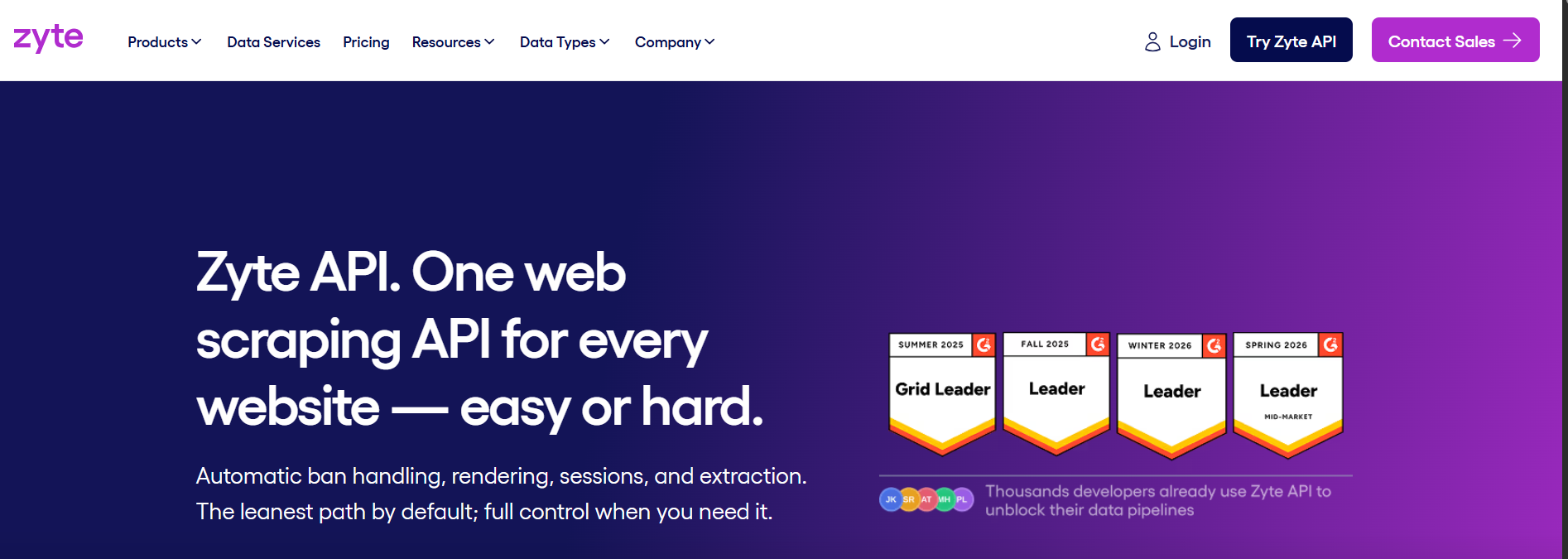
Best for: Teams scraping hard, defended targets that need ban management, browser rendering, sessions and AI extraction in a single API.
Zyte API pros
Handles ban management, rendering, sessions and extraction in one API
Charges only for successful responses, with rate-limited and unsuccessful responses free
Flexible tiers with volume discounts on commitment plans
AI extraction and custom attributes for structured output
Strong documentation and enterprise controls
Zyte API cons
Tiered pricing can feel complex to model up front
May be more than you need for simple, unprotected targets
Some performance figures are vendor-cited benchmarks
Zyte earns the top all-rounder slot because it folds ban handling, browser rendering, sessions and extraction into one API. You are not stitching several services together.
For B2B lead gen, that matters on varied and defended sites. Request logic stays consistent across directories, company pages and profiles, while AI extraction and custom attributes help turn pages into structured records.
Zyte cites independent anti-ban testing with higher success rates and faster response times than several competitors. Treat those benchmarks cautiously, but test the single-API design on your targets.
Zyte uses pay-as-you-go pricing per successful response, with rate-limited and unsuccessful responses free. HTTP and browser-rendered requests use different per-1,000 rates.
Standard plans include $5 in initial free credit, and commitment tiers unlock volume discounts. Failed attempts stay off the bill.
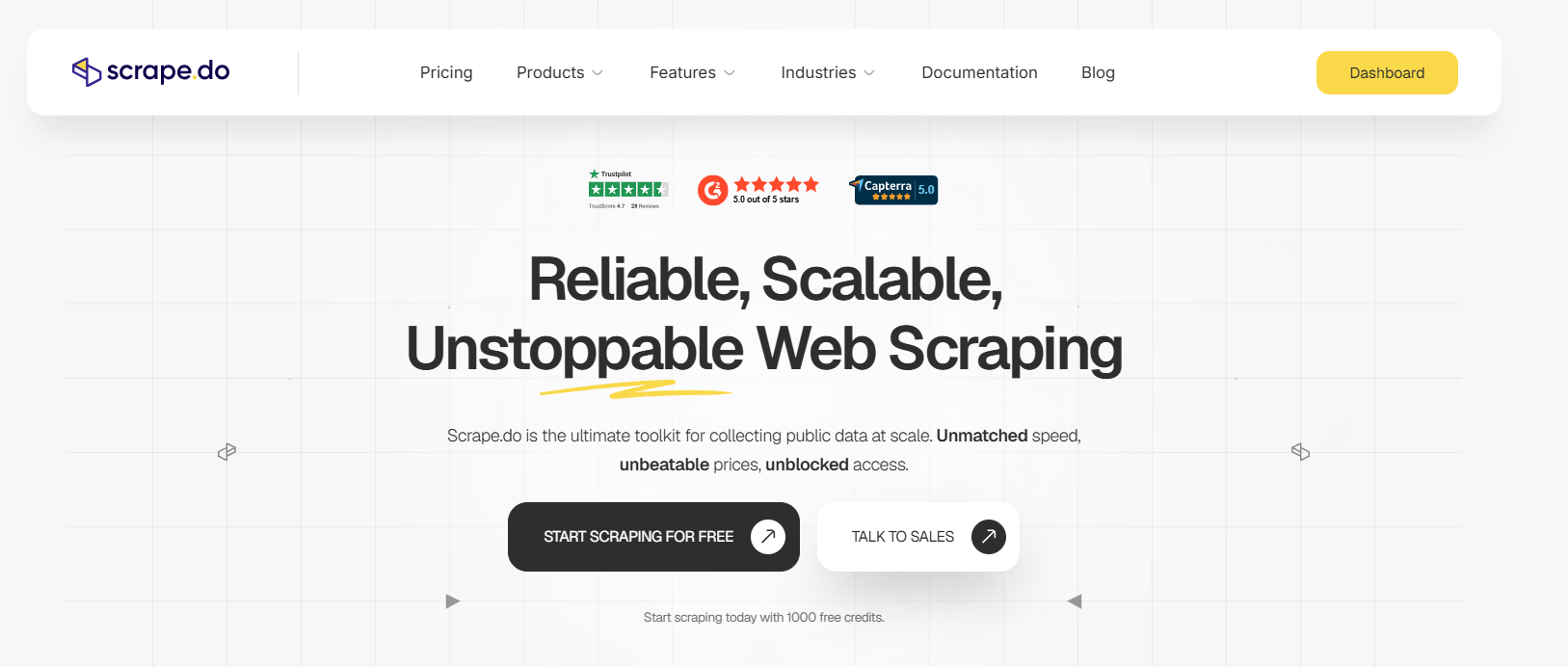
Best for: High-volume B2B lead generation runs that need pay-for-success billing, parsed JSON endpoints and infrastructure-grade anti-bot bypass.
Scrape.do pros
Pay only for successful requests, so failed calls do not hit your invoice
Free plan with 1,000 successful API credits, 5 concurrent requests and access to all features, no card required
Ready APIs return parsed JSON and charge credits only on successful calls
Vendor-stated 99.98% success rate for the Web Scraping API
Vendor-stated access to a 100M+ IP pool
Headless rendering and WAF bypass for protected targets
Scrape.do cons
Proxies and Scraping Browser products are listed as coming soon
Success rate and IP pool totals are vendor claims, not independently verified here
Scrape.do is my pick for teams that want infrastructure-grade scraping with pay-for-success billing and parsed endpoints. You pay credits only when a request succeeds, which fits large lead-gen runs where some targets resist.
The Ready APIs are the other draw. They return parsed JSON and charge credits only on successful calls, so you can skip writing selectors for common targets. In practice, routing hard targets through the Ready Scraper APIs cut parsing work to near zero, and pay-for-success billing kept failed requests off our invoice. See Scrape.do for details.
Scrape.do advertises a 99.98% success rate and access to a 100M+ IP pool. I report those as vendor figures, so run a pilot on your targets. The Proxies and Scraping Browser products are still listed as coming soon.
The Free plan includes 1,000 successful API credits, 5 concurrent requests and access to all features with no card required. That is enough to test parsed endpoints on real targets.
The Hobby plan is $29 per month at $0.11 per 1,000 credits, with 250,000 credits and 10 concurrent requests. Higher tiers add more credits and concurrency, and credits are charged only on successful requests.
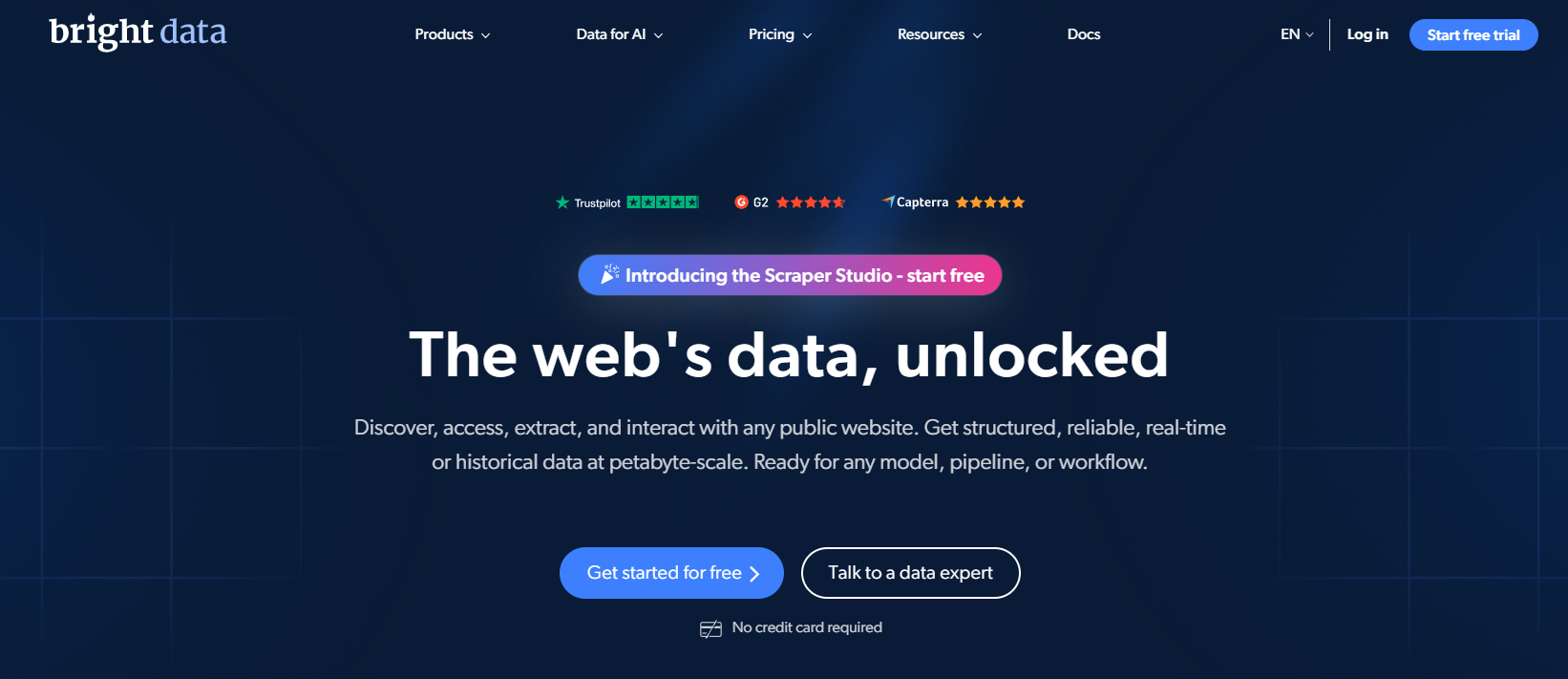
Best for: Lead-gen teams pulling structured data from major targets like LinkedIn and Amazon through 700+ pre-built scrapers.
Bright Data pros
700+ pre-built scrapers that return structured JSON for major sites including LinkedIn and Amazon
Structured outputs reduce engineering work
Multiple delivery options and a broad ecosystem
Dashboards with success-rate alert features
Bright Data cons
Pricing can be complex to model across products
Premium targets cost more per record than standard domains
Costs add up if runs are not tuned
Bright Data gets the nod for library depth. With 700+ pre-built scrapers returning structured JSON for major sites, you can often skip building a scraper and save engineering time on repeated pulls.
The scrapers cover major targets including LinkedIn and Amazon, and the structured JSON drops cleanly into CRM imports. Dashboards and success-rate alerts help you spot failures before they pollute downstream data.
Web Scraper API pricing starts at $1 per 1,000 records for standard domains and $2.50 per 1,000 records for premium targets. Free credits and pay-as-you-go options are available per the docs.
Plan around the premium multiplier if your lead-gen targets skew toward harder sites, since costs scale with record volume.
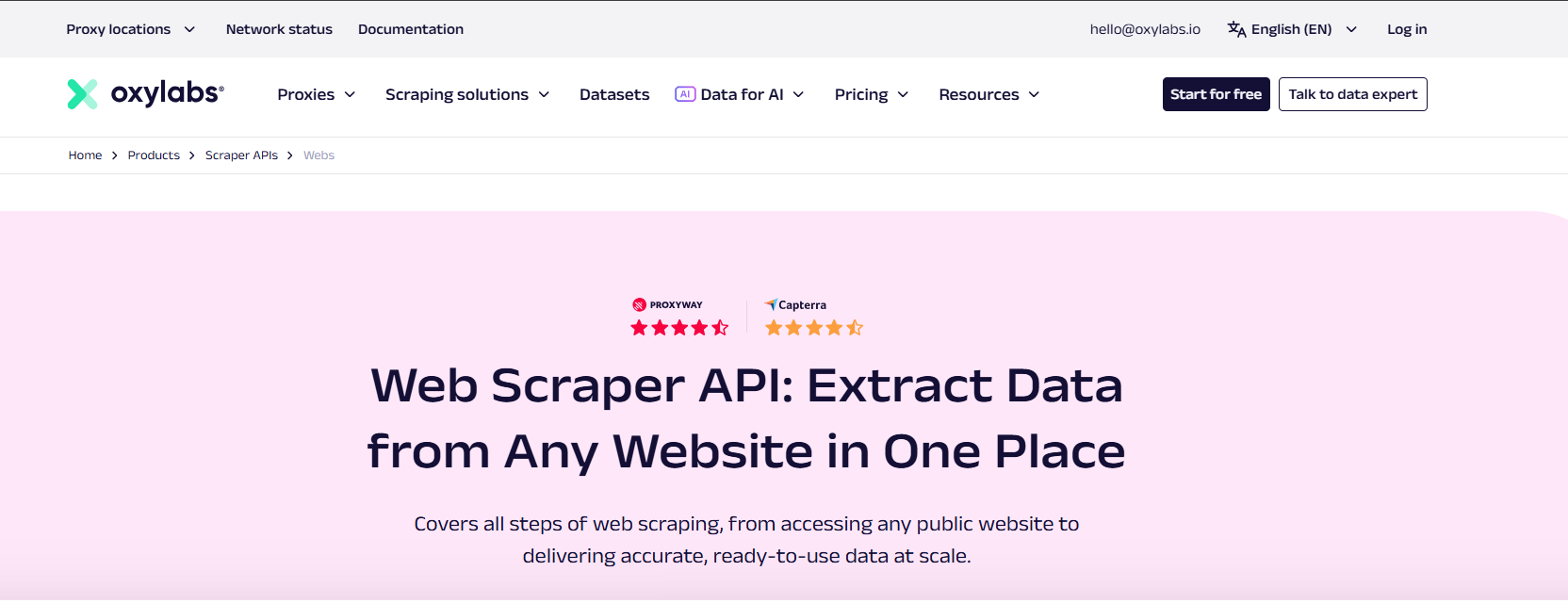
Best for: Enterprise buyers needing result-based billing, SLAs and a broader stack including Web Unblocker and ready datasets.
Oxylabs pros
Result-based billing that counts 2xx and 4xx HTTP codes as successful results
Rich product line including Web Unblocker, headless options and datasets
Free-trial path when starting with the Web Scraper API
Oxylabs cons
Pricing skews toward enterprise buyers
Oxylabs stands out for result-based billing. It counts 2xx and 4xx HTTP codes as successful results for the Web Scraper API, giving teams a clear budgeting definition.
The wider product line is the other reason to consider it. Web Unblocker, headless options and ready datasets give you room to grow beyond a single API, and there is a free-trial path.
Oxylabs bills per successful result on its Web Scraper API, using the 2xx and 4xx definition noted above. A free trial lets you validate the tool on your targets first, while an efficient web hosting control panel helps simplify server management and optimize your web infrastructure.
Plans lean enterprise, so this fits teams that need SLAs and a broader data-product stack rather than a lightweight endpoint.
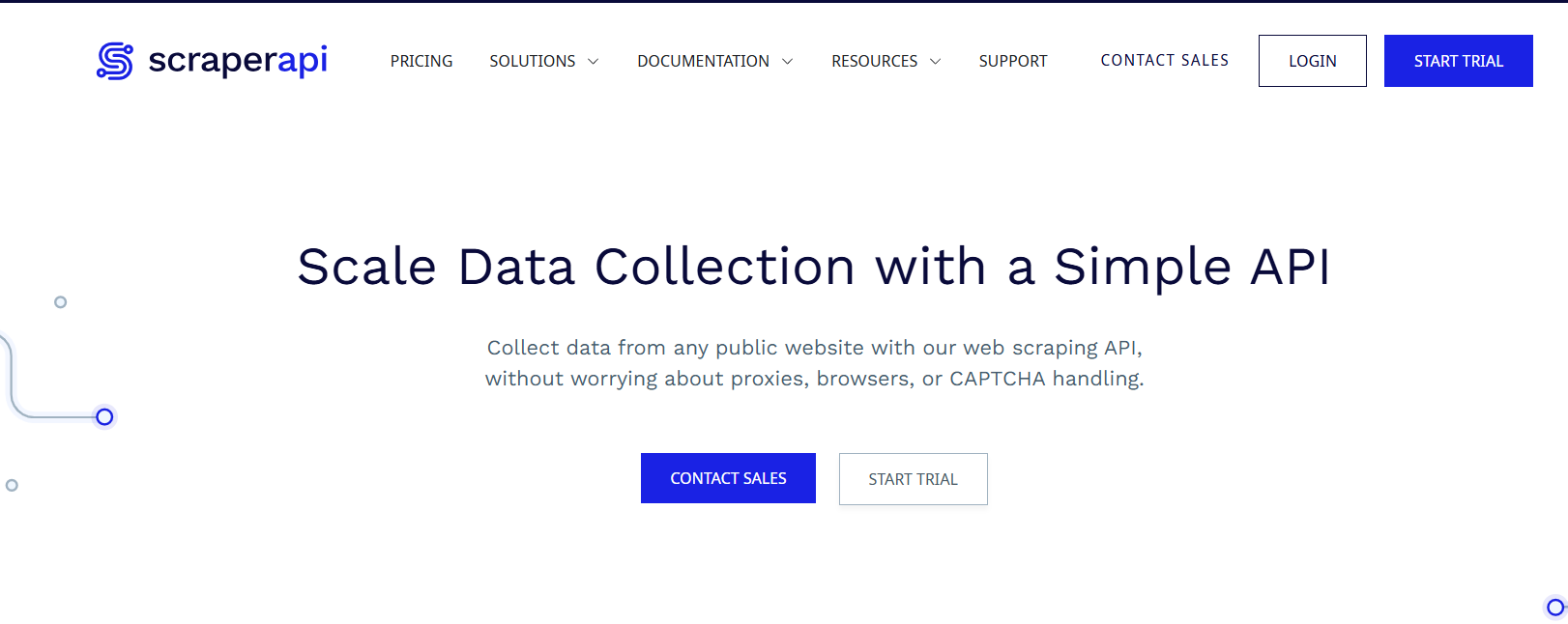
Best for: Teams with existing scraping code that need a low-effort unblocking layer without rewriting the pipeline.
ScraperAPI pros
Easiest retrofit for existing scraping code
Free plan with 1,000 credits and 5 max concurrent connections to test
JS rendering and premium IPs included within credits
ScraperAPI cons
Credit cost varies by domain and parameters
ScraperAPI is the one I reach for when I already have scraping code and need an unblocking layer. The API changes are minimal, so you can bolt it onto an existing pipeline without a rewrite.
JS rendering and premium IPs are included within credits, which keeps the model simple. The catch is domain-based credit multipliers, so read the pricing before you scale a target.
The free plan includes 1,000 credits and 5 max concurrent connections. The Hobby plan is $49 per month for 100,000 credits, with larger buckets on higher tiers.
Credits use domain-based multipliers: standard pages cost 1 credit, Amazon 5, Google and Bing 25, LinkedIn 30, plus 10 more when bypassing major anti-bot systems.
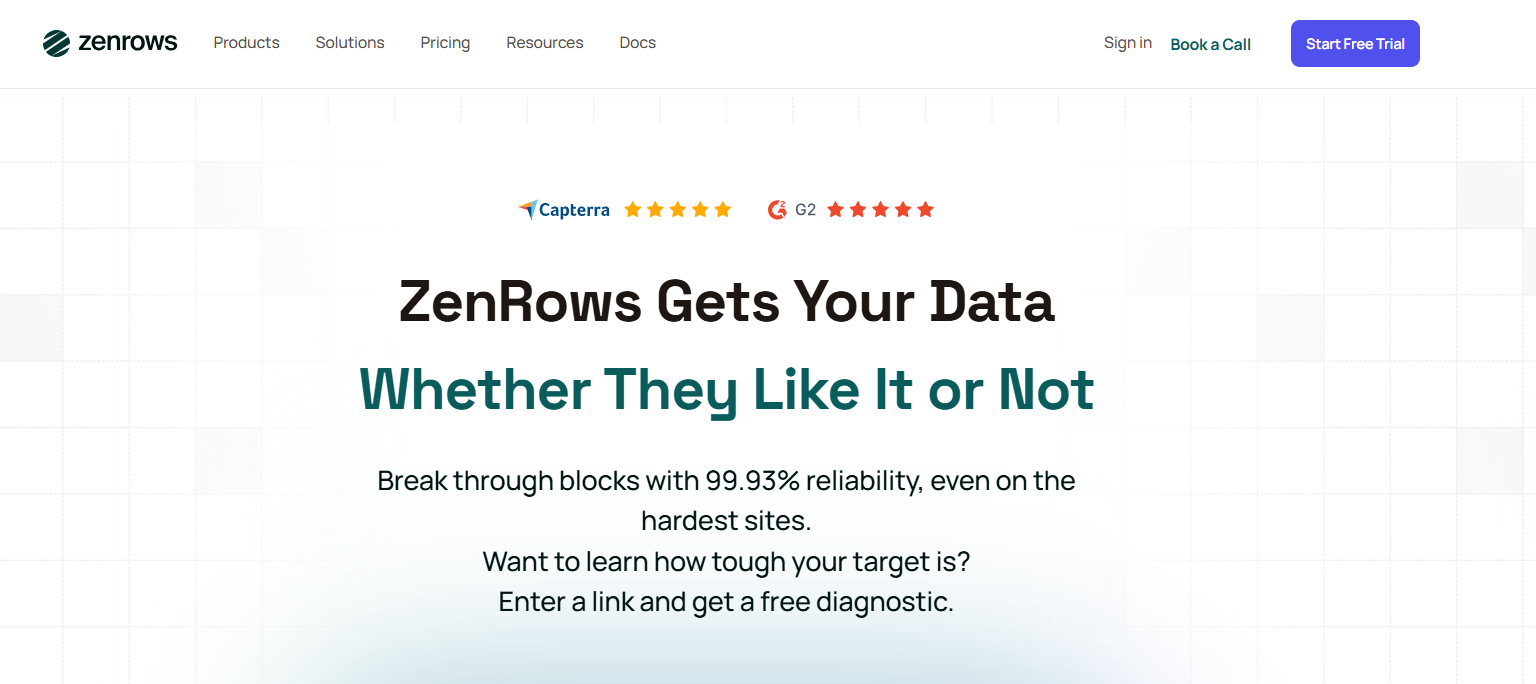
Best for: Developers who want a simple universal API with single-parameter JavaScript rendering and pay-per-success billing.
ZenRows pros
Simple universal API
Headless-browser JavaScript rendering via a js_render=true parameter
Pay-per-success model
ZenRows cons
Some CAPTCHA solving requires third-party integration
ZenRows balances features and simplicity. Turning on JavaScript rendering is a single js_render=true parameter, which helps when a company site or profile needs a headless browser.
The pay-per-success model and clear docs make it approachable for teams that do not want a complex setup. Some CAPTCHA cases need a third-party integration, and heavier anti-bot targets may need premium proxies.
ZenRows offers a free trial with a $1 usage allowance and uses a shared pay-as-you-go balance across products. Billing is pay-per-success.
Add-ons like JS rendering and premium proxies apply multipliers, so factor those in when targets get harder.
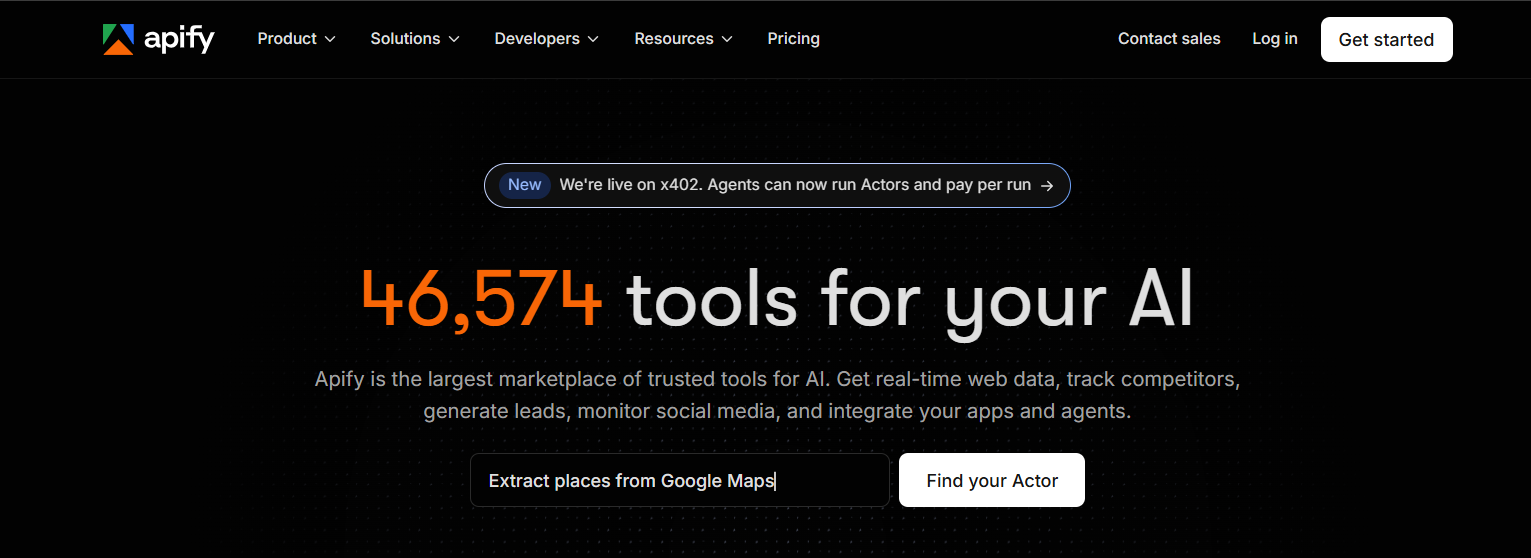
Best for: Teams wanting ready-made actors plus scheduled scraping runs for recurring prospect-data refreshes.
Apify pros
No-code schedulers and a large store of ready-made actors
API to run actors and fetch datasets, with scheduling hourly, daily or on custom intervals
Generous free plan credits to test
Apify cons
Two-layer pricing can be confusing
Apify fits teams that want ready-made scrapers plus automation. The store has actors for many common lead-gen targets, and the API lets you run them and pull datasets programmatically.
Scheduling is the standout. You can run scraping jobs hourly, daily or on custom intervals, which suits recurring prospect-data refreshes without building your own orchestration.
The Free plan includes $5 in monthly credits and charges $0.20 per compute unit. The Starter plan is $29 with $29 in usage included.
Some store actors carry their own pay-per-result pricing, so watch compute-unit metering as you scale.
After working through all seven, Scrape.do is my top pick for teams that want pay-for-success pricing and parsed endpoints for B2B lead gen at scale. Its success-only billing and Ready APIs reduce wasted spend and parser maintenance.
If your targets are the hardest to crack, Zyte API is the all-rounder I would test first. For library depth, Bright Data can save engineering time when you keep hitting the same sites.
Oxylabs suits enterprise buyers, ScraperAPI is the fastest retrofit for existing code, ZenRows keeps JS rendering simple and Apify wins when you want scheduled actors. Run a pilot on real directories, company sites and profiles before committing.
It depends on what you scrape and how you use it. Public business data is lower risk, but terms of service, privacy laws and data-handling rules still apply. Review each target and consult counsel.
It varies by vendor. Scrape.do and Zyte charge only on successful calls or responses, while Oxylabs counts 2xx and 4xx HTTP codes as successful results.
Most bundle anti-bot and CAPTCHA handling into the API to some degree. ZenRows notes cases where third-party integration is needed, and ScraperAPI says embedded CAPTCHAs are not always solved.
Parsed JSON is the most CRM-friendly format. Scrape.do's Ready APIs and Bright Data's scrapers return structured JSON, which makes field mapping easier than parsing raw HTML.
ScraperAPI is the easiest retrofit. You add it as an unblocking layer with minimal API changes while keeping your existing scraping logic.
 AI tools to find & convert leads.
  Send emails at scale